
Sometime evil gets in it’s own way
I’m not a fan of war, and I don’t approve of the Trump administration’s decision to attack Iran; I think it violates both U.S. and international law. That said, standing in the rain up here, I’m trying to be honest about a single, narrow upside amid a cascade of costs: the U.S.–Iran war is likely constraining the flow of Iranian‑designed attack drones to Russia at a delicate moment in Ukraine.
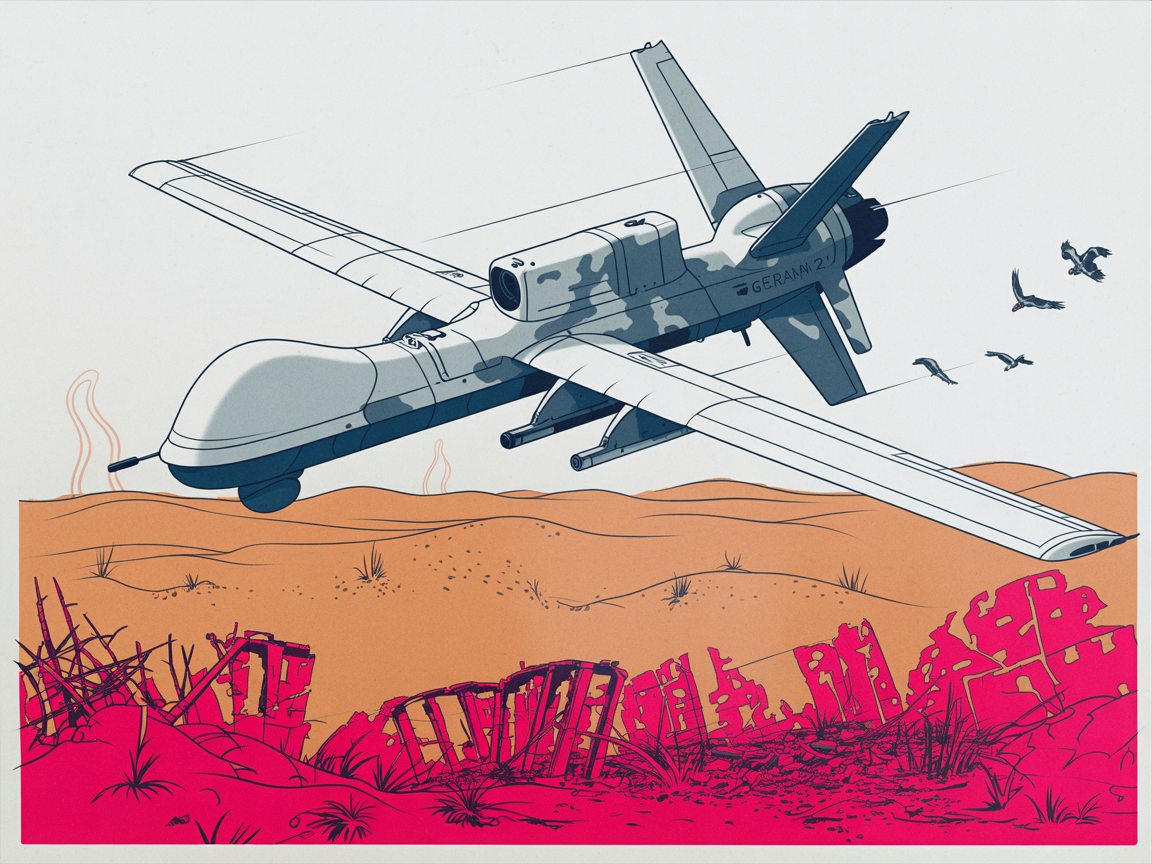
Before the current war, Iran’s Shahed‑series “one‑way” drones became the workhorse of Russia’s punishment strategy: saturating Ukrainian air defenses nightly at scale. Analysts chronicled how imports from Iran evolved into large‑scale Russian production at Alabuga, with output estimates ranging from thousands per month in 2025 to claims of up to 5,000 Shahed‑type drones per month as the assembly line matured with Iranian and Chinese help (CSIS; ISW). By early 2026, open‑source tracking described relentless launches into Ukraine, mixing Iranian‑derived Geran‑2s with new Russian variants; one monthly tally assessed 4,442 Shahed‑type launches in January 2026 (ISIS). Whatever the precise numbers, the point stands: mass mattered, and Shaheds were central to Moscow’s air campaign (CSIS).
Then the war with Iran blew open. Tehran turned the same drones inward, toward U.S. bases and Gulf infrastructure, at Star Wars Empire scale. Gulf states and U.S. forces reported hundreds to thousands of drones launched within days, and even with high interception rates, the sheer volume forced expensive defensive shots (NBC; CNBC). That means large stockpiles in Iran are being burned down and production is being redirected to domestic use—not for export. Even if Russia can now build Shahed‑type drones on its own, Iranian design support, specialized components, and any residual shipments are likely stressed by Tehran’s immediate wartime needs (The Conversation; CFR).
Add logistics. The Strait of Hormuz crisis has disrupted maritime flows and spiked risk premiums. Moving sensitive kits, machine tools, or sub‑assemblies between Iran and partners just got harder and more visible. Even if Russia’s Alabuga plant reduces dependence on finished Iranian airframes, cross‑border technical assistance and component pipelines face friction when Iran is fighting and shipping is constrained (Wikipedia—Strait of Hormuz crisis; Defense One). In short: Iran’s war‑time consumption plus logistics shocks can tighten the spigot that fed Russian drone capacity, especially for surge operations.
Will it matter on the battlefield this spring? Possibly. Ukraine’s air defenders have adapted, but Russia’s ability to keep nightly Shahed attrition at peak tempo has been the backbone of its strategy to grind down power infrastructure and morale (CSIS). If Iran diverts more production to domestic salvos and missiles and drones are consumed faster than Tehran can replenish, Russia may have to lean more on its own lines while accepting bottlenecks in electronics and guidance supply chains that Iran and China helped enable (CSIS; The Conversation). Even a modest dip in inbound kits or expertise could show up as thinner waves or longer intervals between mass strikes—small changes that matter during spring offensives.
To be clear, the evidence is circumstantial rather than conclusive. We have strong indicators of Iranian domestic drone demand skyrocketing, detailed assessments of Russia’s pre‑war reliance and indigenization, and clear logistics disruptions; we do not yet have an official ledger proving that a given number of drones once bound for Russia is now withheld. But if you’re watching for unintended consequences, this is the one sliver of light: a war I oppose may be quietly starving Russia of some Iranian‑linked drone capacity at the exact time Ukraine needs a breather in the night skies (FDD; Asia Times; Al Jazeera).
None of this redeems the decision to go to war. It does suggest how tangled these conflicts have become: the same drone families that terrorized Ukrainian cities are now over Tehran’s horizons, and every one that explodes in the Gulf is one that won’t be launched at Kharkiv. From where I sit, second coffee of the day in hand… that’s a grim arithmetic, but it’s real.
References
- CSIS. “Drone Saturation: Russia’s Shahed Campaign.” May 13, 2025.
- Institute for the Study of War (ISW). “Adversary Entente Cooperation at Russia’s Shahed Factory.” Nov. 21, 2025.
- Institute for Science and International Security (ISIS). “Monthly Analysis of Russian Shahed 136 Deployment Against Ukraine.” Feb. 10, 2026.
- CNBC. “Iran’s Shahed drone: How the ‘poor man’s cruise missile’ is shaping Tehran’s retaliation.” Mar. 5–6, 2026.
- NBC News. “Cheap, effective and battle‑tested by Russia: Iran leans on Shahed drones…” Mar. 3, 2026.
- The Conversation. “Russia’s drone pipeline: How Iran helps Moscow produce an ever‑evolving unmanned fleet.” Jan. 28, 2026.
- Council on Foreign Relations. “The New Era of Drone Warfare Takes Root in Iran.” Mar. 9, 2026.
- Defense One. “The D Brief: Russia’s helping Iran… Drone threats…” Mar. 6, 2026.
- Wikipedia. “2026 Strait of Hormuz crisis.” Accessed Mar. 10, 2026.
- Asia Times. “Iran’s drones giving Russia a critical edge in Ukraine war.” Feb. 4, 2026.
- Al Jazeera. “Ukraine to help down Iran’s drones…” Mar. 2, 2026.
- FDD’s Long War Journal. “Ukraine will help combat Iranian drones in Middle East, Zelenskyy says.” Mar. 5, 2026

Leave a Reply