
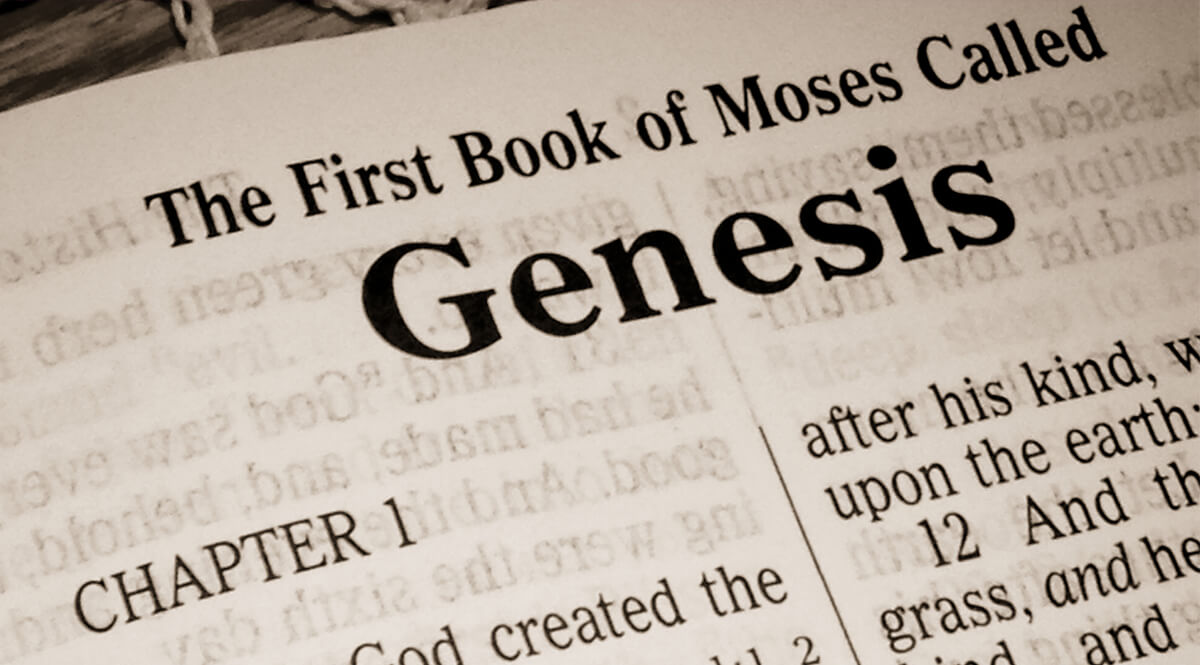
Every so often I revisit the opening chapters of Genesis, not for doctrinal claims, but because they’re fascinating ancient texts. Blame my Jesuit grandmother.
Genesis 1 and Genesis 2 sit side by side in the Bible, yet they come from noticeably different literary traditions and serve different purposes. Reading them closely, especially in the Hebrew, helps us see where they align, where they diverge, and where they actually contradict each other in sequence and emphasis.
This isn’t about telling anyone what to believe. It’s just what you see when you read the chapters as you would any ancient Near Eastern document. Now, I will admit this is primarily from the NIV, and some will find issue with the translation, so I use references from the Hebrew were possible. My translation tool is https://anythingtranslate.com/…/english-to-biblical…/
1. Different Phrases, Different Voices
Genesis 1 consistently uses the divine name “Elohim”, a grammatically plural but conceptually singular Hebrew term typically translated simply as “God.”
The language is formulaic and structured, with refrains like “And God said…,” “And it was so,” and “And there was evening, and there was morning.” This is liturgical, rhythmic writing.
Genesis 2 switches to “YHWH Elohim” (often rendered “the LORD God” in the NIV). That alone signals a shift in source material. The style becomes narrative, earthy, and relational. Instead of cosmic proclamations, we get hands on verbs like “formed,” “planted,” and “breathed.”
Same deity in the theological view, but two very different literary portraits.
2. The Order of Events Isn’t the Same
From a textual standpoint, the sequences do not line up.
Genesis 1 (NIV):
• Light → sky → land/vegetation → sun/moon/stars → fish/birds → land animals → humans created last, male and female together.
Genesis 2 (NIV):
• Earth and heavens in a semi arid state → man formed first → garden planted → animals formed and brought to the man → woman formed last.
The Hebrew verbs reinforce this order. In Genesis 2, the verb for forming humans and animals (“yatzar”) is the same and is presented narratively one after the other. This is not a simple retelling of Genesis 1; it’s a different creation sequence with a different focus.
3. Differences in Purpose and Instruction
Genesis 1 ends with humanity receiving a universal mandate: fill the earth, steward it, rule over other creatures. This is a cosmic, species level role.
Genesis 2 gives the human a localized vocation: till and keep a garden. It introduces moral agency via a command related to a particular tree—not a global directive, but a situational one within a specific landscape.
The Hebrew text supports this shift in scale. Genesis 1 uses broad categories (“earth,” “waters,” “living creatures”), while Genesis 2 zooms in on named geographic features: rivers, soil, a garden region described with specific boundaries.
4. The Style Signals Different Traditions
Scholars note that Genesis 1 has strong similarities to structured ancient Near Eastern cosmogonies, while Genesis 2 resembles an anthropological origin narrative focusing on human identity, relationships, and labor.
In Hebrew:
• Genesis 1 uses bara (“create”) exclusively for divine activity.
• Genesis 2 uses yatzar (“form/shape”), a term also used for potters and artisans.
Those choices matter: one story paints creation as cosmic speech; the other as hands on craftsmanship.
5. How These Two Accounts Function Together
From a literary historical angle, Genesis 1 and 2 aren’t “mistakes” or “duplicates”, they’re two ancient voices placed in dialogue. One offers a cosmic overview; the other zooms in to address what it means to be human, embodied, and situated in a particular place.
They coexist because they serve different narrative and theological roles for the communities that preserved them.
You don’t need to read these chapters through a theological lens to appreciate them. As ancient literature, they’re rich, layered, and sometimes divergent, exactly what you’d expect from texts preserved across centuries and shaped by multiple traditions. Paying attention to language, sequence, and purpose can deepen rather than diminish our understanding.
If you ever want to see how other ancient Near Eastern creation stories compare, or how translation choices in the NIV differ from the Hebrew syntax, happy to dive into that too.

Leave a Reply