
I was monitoring and responding to comments on my Facebook post,
“Theists are so certain their deity created the universe, yet they cannot prove he/she/it did it or if he/she/it even exists.”
What followed was a predictably chaotic thread containing every familiar origin argument. There were declarations that atheists believe “nothing exploded,” claims that DNA is proof of a creator, accusations that scientists think “soup created life,” and repeated insistence that abiogenesis somehow means random magic while creation gets to occupy the realm of reason. The exchange reminded me how often people use the words biogenesis and abiogenesis while talking past what those words actually mean.
The strange thing is that both terms are much less ideological than the people arguing about them.
Historically, abiogenesis literally means life arising from nonlife. The term emerged from nineteenth century debates surrounding spontaneous generation, the old belief that living things could routinely emerge from nonliving matter under ordinary conditions. Aristotle accepted versions of this idea. So did many natural philosophers for centuries. Rotting meat produced maggots. Mud produced frogs. Grain and dirty shirts supposedly produced mice. It sounds absurd now, but before microbiology there was no obvious reason to reject it (Farley, The Spontaneous Generation Controversy, 1977; Aristotle, History of Animals).
Then came a series of experiments by Francesco Redi, Lazzaro Spallanzani, and eventually Louis Pasteur showing that organisms observed in the present come from preexisting organisms rather than appearing spontaneously from their surroundings (Pasteur, “Memoire sur les Corpuscules Organises,” 1861; Farley, The Spontaneous Generation Controversy, 1977). From those findings emerged the principle commonly summarized as biogenesis.
Today, many people treat biogenesis and abiogenesis as competing worldviews. They are not. They are answers to different questions.
Biogenesis concerns continuity. Abiogenesis concerns origins.
Yet public discussions rarely stay there.
When many creationists hear “abiogenesis,” they translate it into a cartoon. The image is usually a puddle, a swamp, or a bowl of primordial soup somehow deciding to become alive. The phrase “life from nonlife” is repeated with a tone suggesting it has already been refuted by sounding ridiculous. But if you step back from the rhetoric, life emerging from nonliving material is exactly what most creation stories describe as well.
Consider Genesis.
וַיִּיצֶר יְהוָה אֱלֹהִים אֶת־הָאָדָם עָפָר מִן־הָאֲדָמָה וַיִּפַּח בְּאַפָּיו נִשְׁמַת חַיִּים וַיְהִי הָאָדָם לְנֶפֶשׁ חַיָּה
Or
“And Yahweh God formed the human from dust from the ground/soil, and breathed into his nostrils the breath of lives, and the human became a living being.” Genesis 2:7
Adam is formed from dust. Clay. Dirt. Earth. Whatever translation one prefers, the material begins as nonliving matter and becomes living matter. That is a form of abiogenesis. The mechanism differs from naturalistic models because divine intervention is inserted into the process, but the core transition remains the same. Nonliving material becomes alive.
The same pattern appears elsewhere. Hindu traditions contain creation stories involving cosmic principles, primordial substances, or divine transformations through which living beings ultimately emerge from what was previously not alive (Doniger, The Hindus, 2009; Flood, An Introduction to Hinduism, 1996). The theological packaging changes. The underlying transition does not.
This is where discussions get weird.
People often argue as though abiogenesis automatically means materialism. It doesn’t. The word says nothing about whether a deity was involved. It identifies the transition. Life originates from nonlife. Period. The cause remains a separate question.
Someone could believe Vishnu initiated the process. Someone could believe Yahweh did. Someone could believe a cosmic intelligence seeded chemistry. Someone could believe purely natural mechanisms were sufficient. All of those positions still involve abiogenesis because all of them contain the same fundamental event.
Life was not alive. Then life existed.
That is the entire point.
Biogenesis carries its own hidden assumptions. Modern biology employs biogenesis because every observed organism comes from another organism. Cells come from cells. Reproduction generates more reproduction. The chain continues. Yet biogenesis alone cannot explain where the chain began.
In practice, strict biogenesis only works indefinitely if one assumes life always existed in some form. Otherwise the principle eventually runs into a wall. Trace ancestry backward far enough and the question reappears. Where did the first living system come from?
This is why Pasteur’s experiments did not disprove modern abiogenesis research. They demonstrated that life does not routinely emerge from nonlife under contemporary laboratory and environmental conditions. They did not address whether very different planetary conditions billions of years ago could have allowed chemistry to cross the threshold into biology (Mayr, The Growth of Biological Thought, 1982; Fry, The Emergence of Life on Earth, 2000).
There is another wrinkle that often gets lost when people talk about abiogenesis, particularly when the discussion is reduced to caricatures about “rocks turning into people” or “soup becoming scientists.” The deeper question may not be how nonlife suddenly became life, but whether the boundary between the two was ever as sharp as we imagine. Modern organisms are chemical systems. Metabolism is chemistry. Replication is chemistry. Catalysis is chemistry. The distinction we draw between chemistry and biology may reflect human categorization more than a discrete event in nature. As I explored in When Materials Start Acting Like Organisms, there are systems that occupy an uncomfortable middle ground, displaying properties associated with living things without satisfying every criterion we normally use to define life. The closer one examines the transition, the more the language begins to wobble.
Viewed this way, abiogenesis may have been less like flipping a switch and more like crossing a shoreline. At what point does a collection of reactions become an organism? Is it when replication appears? When variation becomes possible? When a system begins maintaining itself against its surroundings? Different answers produce different origin stories while describing the same underlying continuum. In Catalysts, Origins, and the Quiet Continuity of Chemistry, I argued that the history of life may be understood not as a break from chemistry but as an extension of it. If that is true, then abiogenesis is not the emergence of something wholly alien from matter. It is matter doing what matter does, eventually producing systems complex enough that we started calling them alive. The hard part is not necessarily explaining how chemistry became biology. The hard part may be identifying the exact moment when we insist they are no longer the same thing.
I find it interesting that participants in origin debates frequently invoke biogenesis as a victory condition while simultaneously proposing an eternally existing deity. An eternal deity is essentially an exemption from origin requirements. Life did not arise from nonlife because life, in the form of God, existed forever. That’s a coherent position, but it reveals what is often left unsaid. Biogenesis by itself does not solve origins. It relocates them.
So what are these concepts really doing?
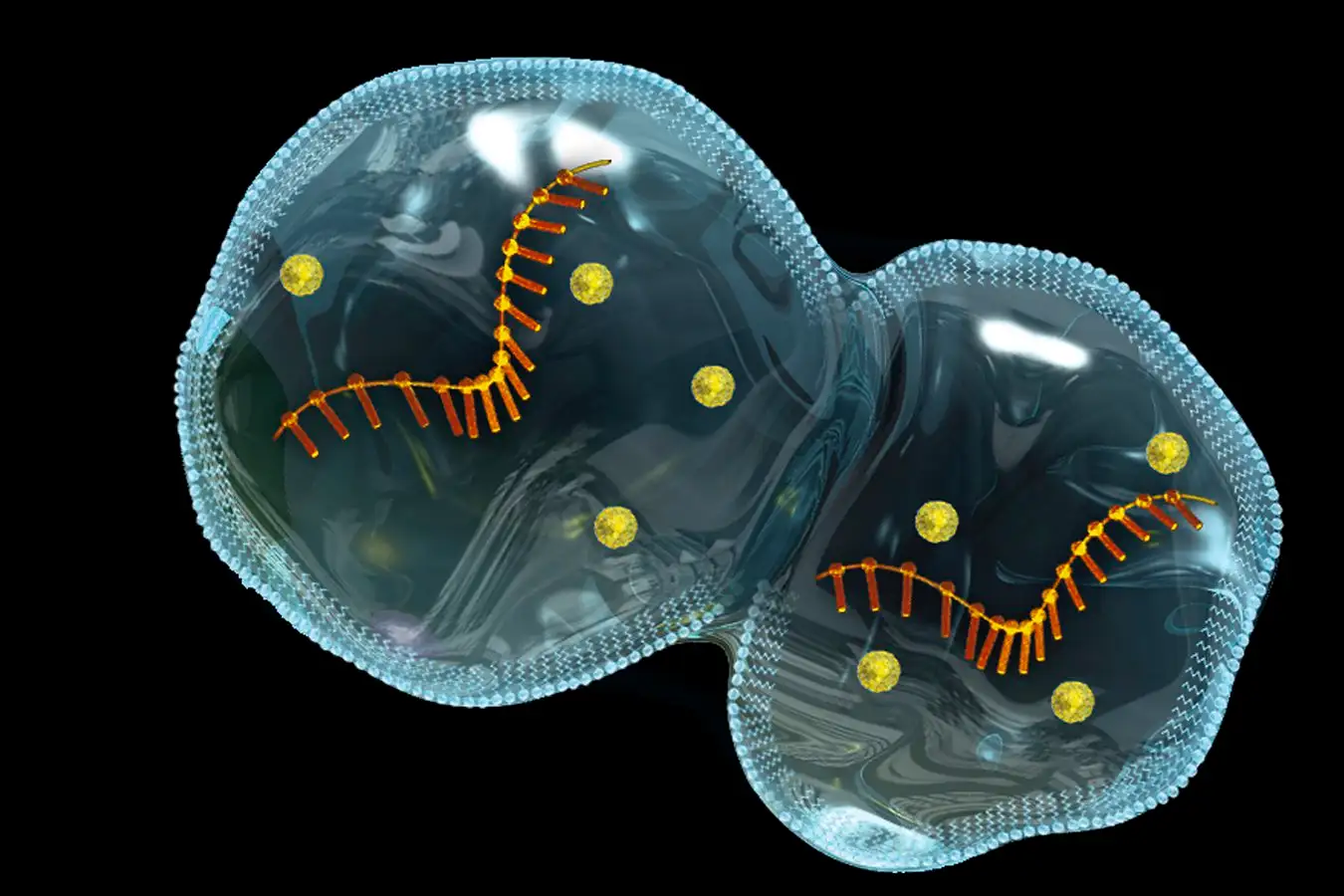
Abiogenesis addresses the appearance of the first living system.
Biogenesis addresses the persistence of living systems once life exists.
One is about crossing the starting line. The other is about the race that follows.
The Facebook thread made me realize how often people fight over the wrong territory. One commenter mocked the idea that “soup created life.” Another defended dirt-created humans without noticing the similarity. Another rejected abiogenesis because life cannot come from nonlife while simultaneously affirming a scripture in which life comes from dust. What exactly was being rejected? The mechanism or the transition itself?
That question lingered with me long after the notifications stopped arriving.
Strip away the slogans, the memes, and the tribal identities, and biogenesis and abiogenesis are not mortal enemies. They are adjacent concepts describing different phases of the same story. Abiogenesis concerns the emergence of life’s first chapter. Biogenesis concerns everything that happens after the book is already open.
References
- Aristotle. History of Animals.
- Doniger, Wendy. The Hindus: An Alternative History. 2009.
- Farley, John. The Spontaneous Generation Controversy from Descartes to Oparin. 1977.
- Flood, Gavin. An Introduction to Hinduism. 1996.
- Fry, Iris. The Emergence of Life on Earth: A Historical and Scientific Overview. 2000.
- Mayr, Ernst. The Growth of Biological Thought. 1982.
- Pasteur, Louis. Mémoire sur les Corpuscules Organisés qui Existent dans l’Atmosphère. 1861.

Leave a Reply