
On the Words We Use When Reality Feels Slightly Off, Mostly Explained, or Just Plain Misnamed
“Etymology is either the world’s most interesting, boring subject, or the world’s most boring, interesting subject.”
That was paraphrased by my 11th grade English teacher from J.R.R. Tolkien’s comment on his own field of study. I did not appreciate the line then. I was too busy trying to remember whether “preternatural” had one r or two, and also whether it mattered. This week, scrolling through Facebook and Threads, I watched “natural” get pulled like a loose thread until the whole sweater of meaning looked ready to unravel. Someone called a coincidence “supernatural.” Someone else insisted that a sunrise was “non‑natural,” which is an impressive claim if you’ve ever stood in a parking lot at 6:12 a.m. in western Washington and felt the sky quietly reboot itself.
I started paying attention, as one does when language starts behaving like weather.
The word “natural” is doing a lot of heavy lifting, and not all of it is fair. In its ordinary sense, it is what emerges without deliberate human interference. A river is natural, because I did not build it, though of course damming it, rerouting it, naming it, and taking its photo for a calendar complicates the claim. The word also slides into “in accordance with nature,” which is already a philosophical assumption dressed in hiking boots. I have said “that feels natural” about everything from a conversation to a decision to move to the Pacific Northwest, as if my preferences were signs etched into cedar bark.
But then come the permutations, each one a tiny fork in the logic.
“Supernatural” appears whenever the speaker wants something to sit above nature, to float beyond the reach of the ordinary rules. I see it used for everything from ghosts to gut feelings about a stranger in a coffee shop. Yet I keep thinking of how often people are really reaching for something else, something more precise but less dramatic. They mean “divine,” perhaps, which carries a claim about agency and origin. Or they mean “spiritual,” a word that suggests interiority, not violation of physical law. Or they mean “metaphysical,” which is the most honest and least exciting of the three, because it refuses to promise an apparition. The mistake is not harmless. To call a coincidence supernatural is to confuse pattern recognition with intervention. It is like attributing my cat’s ability to appear in the kitchen at the exact moment I open a can of tuna to a violation of physics instead of a very well‑developed set of instincts and habits.
I once wrote in the margin of a book, half‑awake at a café in Ballard, that “supernatural” is often just “natural” with the human need for agency projected onto it. I still think that, though I suspect I was trying to sound clever for an audience of one.
Then there is “preternatural,” a word that feels like it should be whispered in a library. It is not above nature, but beside it, beyond it in an adjacent way. Thomas Aquinas, in his careful taxonomy, uses distinctions like this to separate what is beyond ordinary human capacity without necessarily being divine (Aquinas, Summa Theologica, 1265‑1274). The preternatural is that odd shimmer at the edge of what can be explained, the uncanny but not impossible. The moment when the timing of events feels too neat, as if someone tuned the universe slightly. I think of it as the language you use when you are not ready to call something miraculous, but you are also not willing to file it under “random.” It is the word you reach for when you want to keep your options open.
I keep noticing how often “preternatural” is the word people are circling without naming. They will say “supernatural,” but what they describe is closer to a flicker of recognition that has no clear source, a kind of cognitive déjà vu that feels slightly off-kilter, like walking into a room and forgetting why you entered, except the room itself seems to remember you. Neuroscientists call déjà vu a glitch in familiar processing, a mismatch between memory systems that produces a false sense of prior experience (Brown, The Déjà Vu Experience, 2004). The language of the supernatural is too theatrical for that kind of subtle disturbance. It suggests intervention, when what is actually happening is a quiet misalignment, a preternatural edge where perception and interpretation briefly disagree. It is the feeling you get when a coincidence tilts just enough to feel meaningful, or when a pattern seems to form without enough evidence to justify it, and you hesitate, not because you believe in ghosts, but because you are unsure whether your own mind is playing a trick with timing.
“Unnatural,” on the other hand, is where things get blunt. It implies deviation, but deviation from what? From a norm that someone has already decided is correct. In some contexts, it is morally loaded, a way of saying “wrong” without taking full responsibility for the judgment. I have heard it used about behaviors, about food, about the shape of a city. In each case, it sounds like an appeal to a standard that exists outside the speaker, when, in fact, it is often just preference wearing a lab coat. In environmental discourse, “unnatural” sometimes means “human‑made,” though that too collapses under inspection. Is a beaver dam unnatural because it is constructed, or natural because the beaver is not reading architectural journals? The word refuses to settle, which is perhaps its most natural feature.
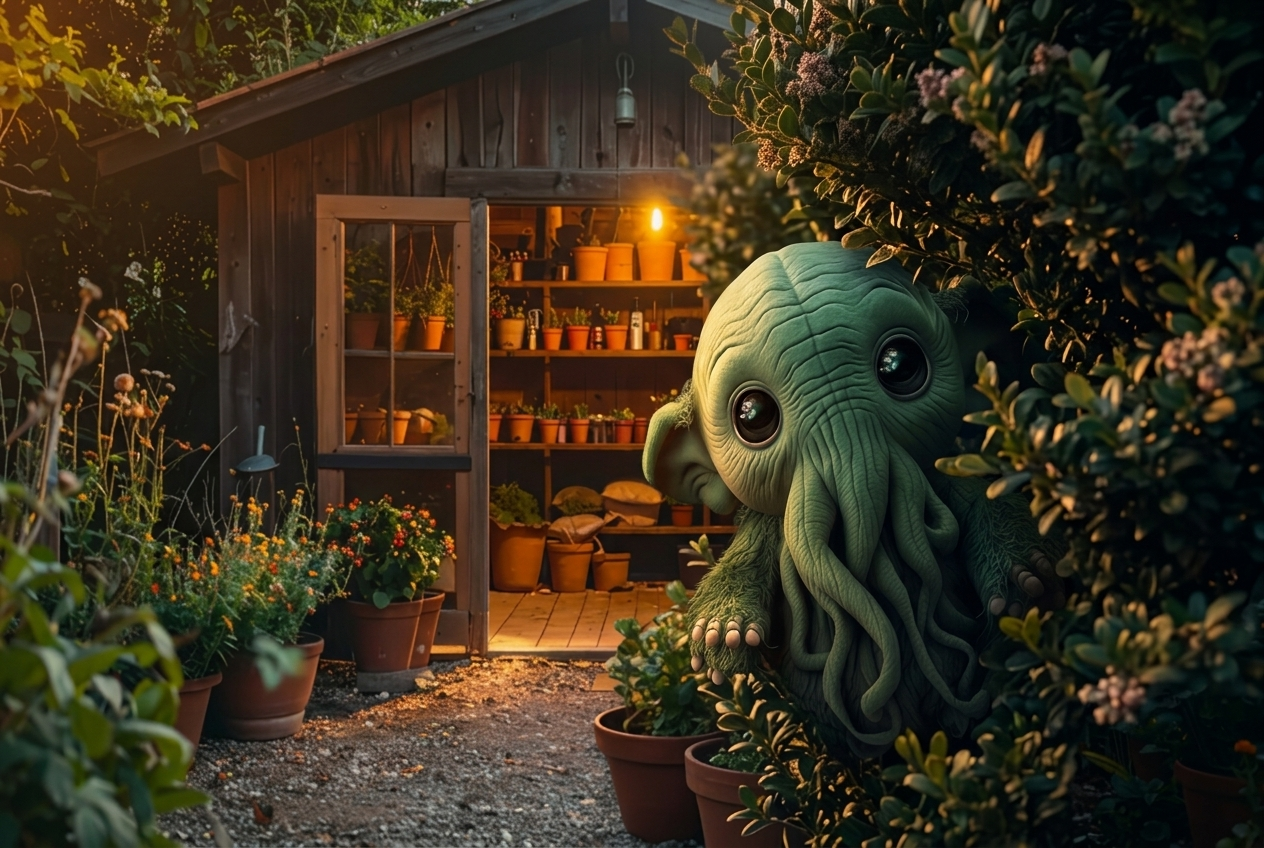
In horror, the word “unnatural” tends to arrive like a verdict, already decided and irreversible. H. P. Lovecraft leans on it repeatedly, as when he describes things that are “unnatural” in the sense of being “not of this world” and therefore intolerable to the human mind, a linguistic flinch that shows up in The Colour Out of Space and elsewhere (Lovecraft, The Colour Out of Space, 1927). In that usage, “unnatural” is less a description than a boundary marker, the place where cognition gives up and starts calling the unknown by a name that feels like it explains something. But in a different key, closer to moral judgment than cosmic dread, the word shows up as a kind of social accusation.
In Harriet Beecher Stowe’s Uncle Tom’s Cabin, the institution of slavery is repeatedly framed as “unnatural,” not because it violates physics, but because it violates a moral order the characters insist is self-evident and universal (Stowe, Uncle Tom’s Cabin, 1852). The same word, two very different instincts: one recoiling from the incomprehensible, the other from the unethical, and both treating “natural” as if it were a standard rather than a story people tell themselves.
“Non‑natural” is the quietest of the group, and also the most precise when used honestly. It is simply the absence of the category. Not natural, without suggesting that anything is therefore wrong, holy, or uncanny. It is the term you use when you have stopped trying to assign emotional weight. I find it strangely comforting, like a clean label on a storage bin. Still, I rarely see it used outside of formal contexts, which probably says something about our preference for meaning with texture.
“Non‑natural” does exist in the wild, but it tends to stay in controlled habitats. In conservation biology, for instance, you will see it used to describe “non‑natural mortality” in wildlife populations, meaning deaths caused by human activity rather than predation or disease, a clean, almost clinical distinction that carries no moral panic, only accounting (IUCN Red List Categories and Criteria, 2012). In a different register, legal language uses it in phrases like “non‑natural death” on a coroner’s report, where the term is stripped of poetry entirely and narrowed to its function, separating accident, suicide, and homicide from natural causes (CDC, National Vital Statistics Reports, various). Both uses resist drama. They are not interested in whether something feels eerie or wrong, only in whether it belongs to the category or falls outside it, which is precisely why the word so rarely survives outside these formal rooms.
The deeper issue is not that people misuse these words, though they do. It is that the words carry philosophical assumptions that get smuggled into everyday speech. When someone says “that was supernatural,” they are not just describing an event. They are making a claim about the structure of reality, or at least about their willingness to accept one. When someone says “that feels natural,” they are also making a claim, though usually without noticing. I have caught myself doing this, relying on the word as if it were a neutral measure rather than a loaded one. It is easier than thinking too hard about where instinct ends and habit begins.
A question that has stuck with me: if everything that happens is, by definition, within the totality of what exists, what exactly falls outside “nature”? And if nothing does, why do we keep reaching for words like “supernatural” as though we are pointing at something real rather than expressing a kind of intellectual longing?
What gets called “supernatural” is usually just natural phenomena with a story bolted onto them. Take déjà vu again. People report it as if they have stepped briefly outside time, as if the world has hiccupped in a way that demands explanation beyond the brain. The standard account is far less dramatic: a misfiring of memory systems, a timing error between familiarity and recognition, nothing that requires the universe to bend. Or consider intuition, often treated like a whisper from elsewhere. In practice, it behaves like a rapid synthesis of pattern and experience, a kind of compressed reasoning that moves faster than self‑reflection can track.
Even things like sleep paralysis, which has fueled centuries of “unnatural” narratives, sits very comfortably inside known physiology. The body wakes before the mind, the dream lingers, and the result is a perfectly explainable sense of presence that feels anything but explainable in the moment. I have had my own version of this, lying awake in a dark room, convinced for a brief second that something was there, until my rational mind caught up to the fact that it was just my nervous system doing what nervous systems do.
This is where the categories start to blur, because the line between “nature” and its permutations is often drawn at the edge of explanation, not at the edge of reality. If you accept the science, then what people call “supernatural” collapses into “natural, not yet understood.” If you reject it, you are not expanding the category of nature, you are substituting a different framework entirely, one that is unfalsifiable by design.
The same tension appears in the “preternatural” register, where odd coincidences, striking timing, or a sense of pattern without clear cause get treated as if they point to something beyond the system. A friend once told me about a string of coincidences that felt “too perfect to be random,” and I remember thinking how easily probability gets mistaken for intention. In a large enough sample space, improbable things are not just possible, they are guaranteed. The world does not need to be pushed outside nature to generate moments that feel like they belong elsewhere. It only needs enough complexity, enough noise, and enough human attention to stitch meaning across the gaps.
The more I watch these terms circulate online, the more I suspect they function less as descriptions and more as shortcuts for uncertainty. “Supernatural” can be a way of saying “I do not understand this, but I want it to matter.” “Preternatural” can be a way of saying “I almost understand this, but not quite.” “Unnatural” can be a way of saying “I do not approve.” “Non‑natural” can be a way of saying “I am done arguing.”
I am not immune. Last month, I stood on a trail near Snoqualmie, rain sharpening the edges of everything, and thought, with no small amount of melodrama, that the silence felt almost preternatural. It did not. It was just weather and timing and the absence of other hikers. Still, the word arrived, uninvited and a little persuasive.
So I keep returning to that classroom paraphrase, the one about etymology. The subject is not just interesting or boring. It is interesting because it is boring in the way that scaffolding is boring until you realize it supports the entire building. These words are scaffolding. They hold up the way we talk about reality, belief, and exception. Pull on them carelessly, and the structure wobbles.
Which brings me to a simple, slightly uncomfortable dilemma: when you use “natural” or any of its permutations, are you describing the world, or are you negotiating your place in it?
And if that answer feels too clean, too natural, maybe you are finally getting close.
References
• Aquinas, Thomas. Summa Theologica. 1265–1274.
• Brown, Alan S. The Déjà Vu Experience. 2004.
• Chalmers, David J. The Conscious Mind. 1996.
• Harari, Yuval Noah. Sapiens: A Brief History of Humankind. 2011.
• OED Editors. Oxford English Dictionary. Entry: “natural,” “supernatural,” “preternatural,” “unnatural,” “non natural.”
• Tolkien, J. R. R. On Fairy-Stories. 1947.
• U.S. Centers for Disease Control and Prevention (CDC). National Vital Statistics Reports. Various years.
• International Union for Conservation of Nature (IUCN). IUCN Red List Categories and Criteria. 2012.

Leave a Reply