
I read this question on Threads while sipping a too-hot coffee in a too-cold morning: “Wouldn’t a national ID solve the voting issue?” The phrasing hung in my notifications like a damp sock on a line, not offensive, just odd and overconfident. I reread it a few times, wondering what “the voting issue” was supposed to be. It reminded me of when someone in Seattle once suggested putting bear bells on bicycles to “keep the elk away.” Elk were not, at any point, menacing cyclists, despite observations at Voodoo Donuts. Yet everyone nodded solemnly because certainty has a way of bullying probability into the corner.
I tried answering honestly. The trouble is that the premise assumes voter fraud is common enough to require a fix, which is a sturdy misunderstanding made sturdier by repetition from people with either microphones or suits, sometimes both. The frequency of confirmed voter fraud is so microscopic that comparing it to anything normal sized distorts the scale. When researchers examined ballots cast over multiple cycles, the verified rate hovered between 0.00006 percent and 0.0025 percent (Minnite, The Myth of Voter Fraud, 2010). Depending on your criteria including unintentional fraud, that’s 1 in 1.6 million ballots. Numbers like that do not hint at a crisis so much as a clerical-event horizon.
People are statistically more likely to be struck by lightning than to encounter a fraudulent vote. The National Weather Service puts annual lightning odds around one in 1.2 million (Coleman, Lightning Facts, 2021). I’ve only known one man who survived lightning, and even he suspiciously refused to talk about the incident, as though embarrassed that the sky singled him out (golfers… as if that was singling enough). But even that freak encounter is an everyday occurrence compared to voter fraud. I don’t love the idea that lightning is more trustworthy than our collective understanding of civics, but here we are.
In the same conversation about national IDs, someone insisted that fraud has “got to be happening everywhere.” This is America, after all, land of overestimation. But winning an Olympic medal is more common than committing voter fraud, at least statistically, and that’s saying something. The tally of U.S. medals relative to the population works out to roughly one in 662,000 (Gibbs, Olympic Demographics, 2020). If I had those odds on anything, I’d be halfway to the track by now, which would be a mistake because I run like a wet puffin.
Even getting killed by a meteorite, which sounds like a line from a bad insurance commercial, is estimated at one in 1.6 million (Chapman, Hazardous Asteroids, 2004). And yet even meteoritic doom is on par or more likely than a fraudulent ballot. You could be going about your day, minding your own business, when the universe decides to bean you with a space rock, and still the cumulative probability of that cosmic prank outweighs the supposed epidemic of voter fraud.
The poker crowd tends to take probabilities seriously, but even they need to squint at the national ID argument. A royal flush appears once every 649,740 hands (Sklansky, Theory of Poker, 1999). I don’t know anyone who has actually seen one outside a movie, but that does not stop people from believing they are just one more hand away. Curiously, many of the same folks will reject the math on elections while confidently lecturing you on the draw odds behind their trembling stack of chips.
Shark attacks still show up in people’s imaginations as a weekly threat, especially among folks who have stood in the Pacific once and declared it “different.” Statistically, a shark attack is around one in 3.7 million over a lifetime (Burgess, Shark Incidents, 2018). Meanwhile the number of fraudulent ballots is so small that shark attacks feel almost routine by comparison. I can close my eyes and picture a shark, which is more than I can say for a documented, malicious, vote-altering scheme.
The national ID fan in the thread doubled down, which is a behavior I expect from gamblers and toddlers. The conversation drifted into “risk management,” a term that should require a license to use. I wanted to ask him if he favored redesigning vending machines, because statistically you are more likely to die from a vending machine toppling onto you than from voter fraud. Various safety reviews estimate those odds at about one in 112 million (Ryan, Unusual Fatalities, 2015). Yet no one argues for a federal vending-machine registry.
Airplane crashes also lurk in our cultural anxiety despite being astonishingly rare. Global aviation analyses put the fatal accident rate at roughly one in 11 million flights (IATA, Safety Report, 2022). I’ve personally sat next to people gripping the armrests as if we were flying into a volcano. I sympathize, but again the scale is off: planes crash more often than voter fraud appears.
The IRS is also more eager than any mythical horde of fraudulent voters. Audit rates vary by income, but the overall likelihood in recent years sits around one in 167 (IRS, Data Book, 2021). In other words, the government is more likely to question your TurboTax decimals than someone is to impersonate a voter successfully.
Winning the lottery, which I keep doing metaphorically but not financially (it’s what happens when you use bottle caps instead of dollars), is around one in 292 million for Powerball (Powerball, Game Odds, 2023). That’s a cosmic-level improbability. Yet it is still more probable than the imagined waves of coordinated voter fraud that people envision with absolute confidence.
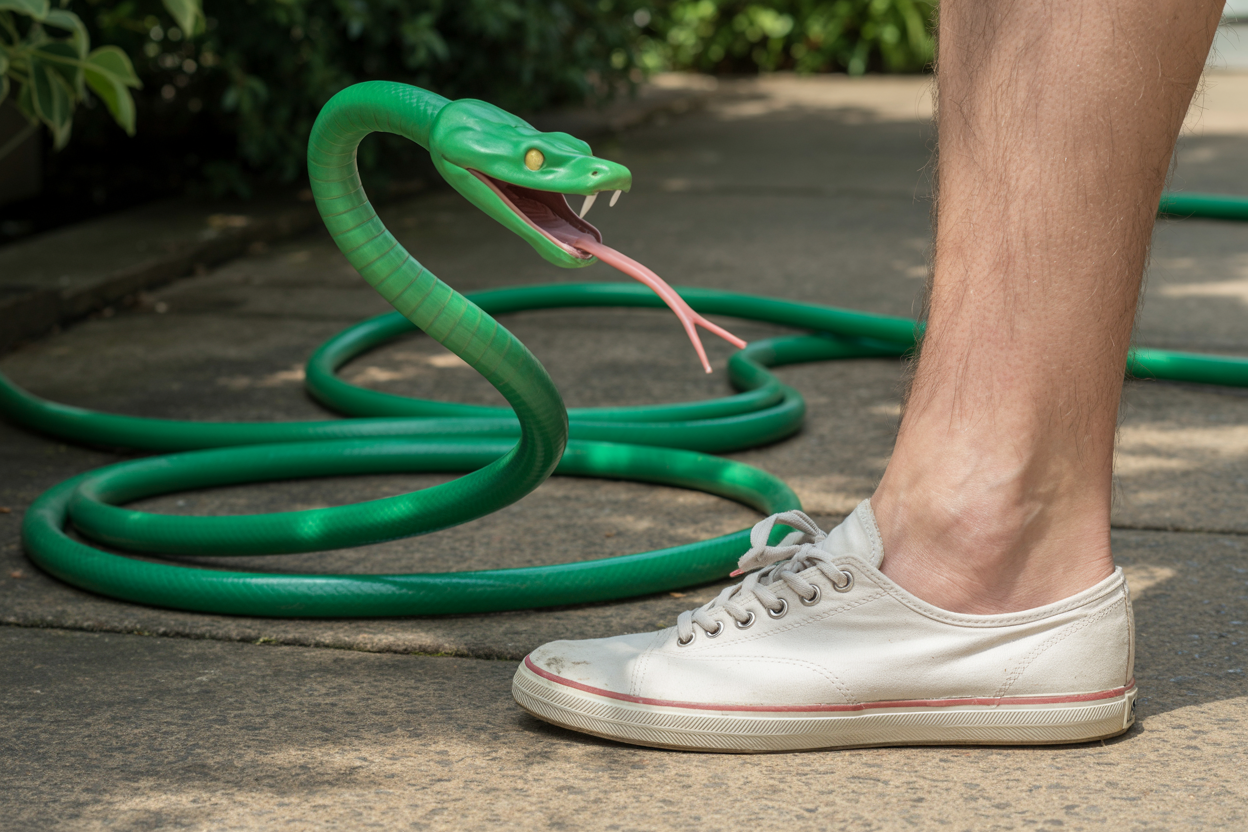
As for venomous snakebites, they hover around one in 50,000 annually in the United States (CDC, Venomous Bites, 2018). Even I, someone who once tripped over a garden hose and apologized to it, have managed to avoid this fate. And still snake encounters remain more common than fraudulent ballots in a country with more voters than snakes.
Every time I read another proposed high-security voting fix, I get the sense that people think democracy is held together with duct tape and panic. The national ID idea feels like a solution in search of a threat. We could just acknowledge that the problem is tiny enough to be swallowed by statistical noise, but Americans have an exquisite talent for misunderstanding probability when someone authoritative points dramatically at the wrong danger.
When I finally typed my answer on Threads, I realized I’d veered into the personal. I admitted that the only thing I’ve lost to elections is sleep, never faith, and certainly not trust in the basic arithmetic of the universe. There is no epidemic. There is only the fear of one, and it spreads faster than facts. I pressed send, sat back, and let the cold Pacific air come in through the window, feeling smugly reassured that if anything was going to get me today, statistically speaking, it would be the vending machine in the break room.
References
Burgess, G., Shark Incidents, 2018.
CDC, Venomous Bites, 2018.
Chapman, C., Hazardous Asteroids, 2004.
Coleman, T., Lightning Facts, 2021.
Gibbs, L., Olympic Demographics, 2020.
IATA, Safety Report, 2022.
IRS, Data Book, 2021.
Minnite, L., The Myth of Voter Fraud, 2010.
Powerball, Game Odds, 2023.
Ryan, M., Unusual Fatalities, 2015.
Sklansky, D., Theory of Poker, 1999.

Leave a Reply