
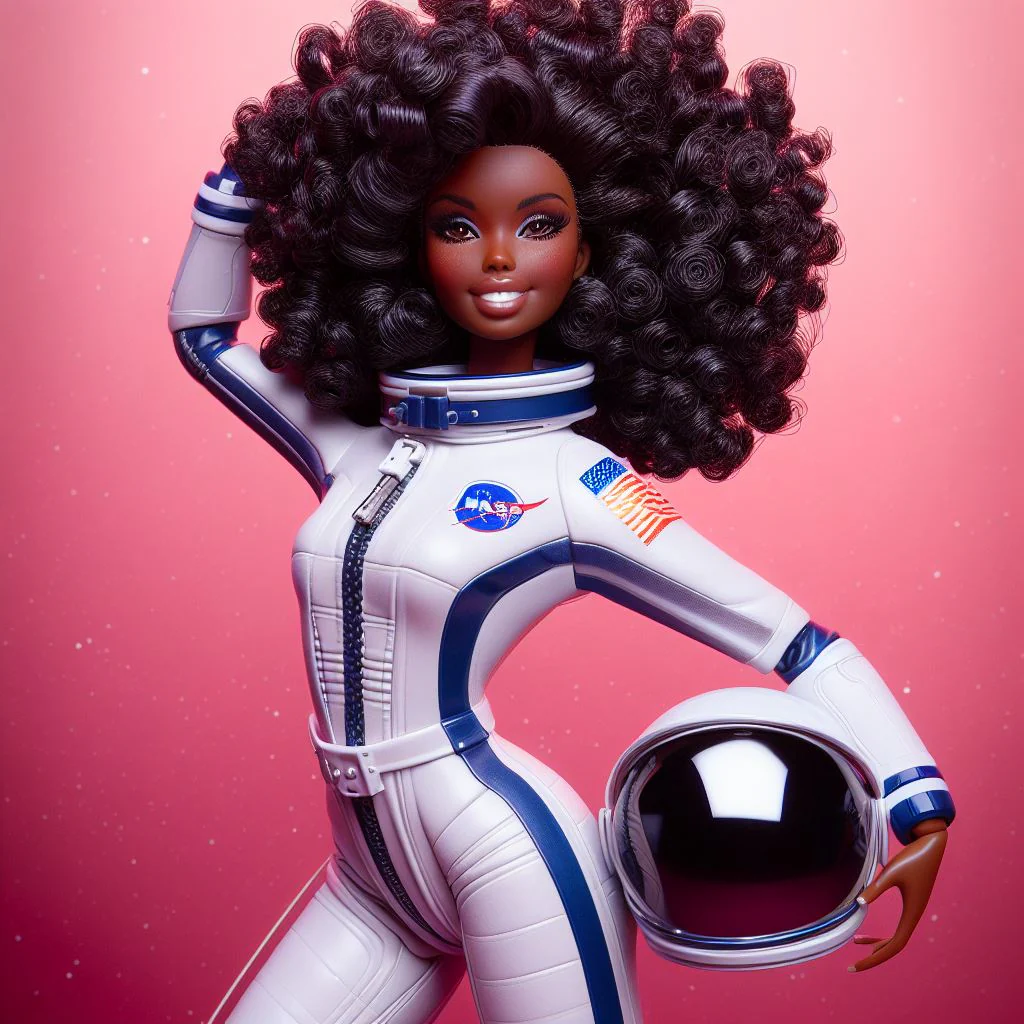
Part 1 of 5: Women in STEM — Context, Continuity, and the Work Still Ahead
This is the first installment in a five‑part series examining women in STEM. Before getting into policy, education, or workplace reform, it’s worth stepping back and asking a simpler but harder question: how did we get here, and why does the imbalance persist in cultures that publicly value science, innovation, and merit?
From where I sit, the conversation often jumps too quickly to solutions without spending enough time on context. History matters here, not as a feel‑good backdrop, but as a record of how participation in science has been shaped, constrained, and selectively encouraged.
A Brief Historical Grounding
In the nineteenth century, Western scientific institutions were not merely inhospitable to women; they were explicitly exclusionary. Education, professional societies, laboratories, and funding structures were largely closed to them by design. That makes the achievements of figures like Ada Lovelace and Marie Curie notable not just for their brilliance, but for the institutional resistance they overcame. Lovelace’s work on Charles Babbage’s Analytical Engine anticipated core principles of computer science at a time when women were formally barred from scientific careers (Essinger, Ada’s Algorithm, 2014). Curie’s research on radioactivity reshaped physics and chemistry, yet even she encountered skepticism, isolation, and repeated challenges to her legitimacy (Quinn, Marie Curie, 1995).
Moving into the twentieth century, the pattern continued. Rosalind Franklin’s contributions to understanding DNA structure were indispensable, yet recognition came late and incompletely, shaped by gendered norms about authorship and authority in science (Maddox, Rosalind Franklin, 2002). Katherine Johnson and other Black women mathematicians at NASA performed calculations critical to early spaceflight while navigating both racial and gender segregation (Shetterly, Hidden Figures, 2016). These are not anomalies. They are evidence of how scientific progress has often depended on people working at the margins of recognition.
What stands out to me is that women were never absent from STEM. They were present, productive, and essential, but systematically filtered out of credit, advancement, and institutional memory.
Where Things Stand Now
It would be inaccurate to say nothing has changed. Women now earn a substantial share of undergraduate degrees in science overall, and in some fields they outnumber men at entry levels. But the pattern fractures quickly as careers progress. Women remain underrepresented in engineering, computer science, and physics, and they are disproportionately absent from senior academic positions, executive roles, and decision‑making bodies (National Science Foundation, Women, Minorities, and Persons with Disabilities in Science and Engineering, 2023).
The so‑called “leaky pipeline” is often invoked to explain this attrition, but that phrase can obscure more than it reveals. Pipelines do not leak on their own. People are pushed out, filtered out, or decide that the cost of staying is too high. Research consistently points to cumulative disadvantages: biased evaluation, unequal access to mentorship, workplace cultures that reward overwork, and career timelines that collide with caregiving expectations (Cech and Blair‑Loy, Gender & Society, 2019).
I’ve noticed that discussions of these issues sometimes drift toward individual resilience, as if the problem were a lack of confidence rather than a surplus of friction. That framing lets institutions off the hook.
Role models and mentors do matter, but not as symbols alone. Visibility helps only when it is paired with structural support. Seeing women succeed is important; knowing that success is repeatable and sustainable is what actually changes behavior (Dasgupta, Current Directions in Psychological Science, 2011).
Why Gender Diversity in STEM Is Not Optional
The case for gender diversity in STEM is often made in moral terms, and rightly so. Equity matters. But there is also a pragmatic argument that deserves equal weight. Diverse teams consistently outperform homogeneous ones on complex problem‑solving tasks, particularly in fields that rely on creativity, uncertainty management, and interdisciplinary thinking (Page, The Difference, 2007). STEM work increasingly operates in exactly that space.
There is also an economic dimension that is hard to ignore. As societies confront climate change, public health crises, infrastructure transitions, and cybersecurity threats, excluding large segments of the population from technical fields is not just unjust, it is inefficient. We are choosing scarcity where abundance is available (OECD, Education at a Glance, 2022).
But beyond productivity and competitiveness, there is a cultural question that matters to me personally. Who feels that STEM is “for them” shapes what problems get prioritized and what solutions are imagined. Inclusion is not about optics. It is about whose questions are taken seriously.
Setting the Stage for What Comes Next
This series will move beyond description into analysis of education pathways, workplace structures, and policy choices that shape participation in STEM. But none of that makes sense without acknowledging that today’s disparities are not accidents. They are the cumulative result of historical exclusion, cultural narratives, and institutional design.
I’d encourage readers to think critically about what else discourages women from STEM careers that we rarely name out loud. Economic risk during long training periods. The normalization of unpaid labor early in scientific careers. Evaluation systems that conflate availability with commitment. These factors are not evenly distributed, and they matter.
If we want a more inclusive and innovative STEM landscape, the work begins with being honest about how the current one came to be. Progress is possible, but only if we stop treating underrepresentation as a mystery and start treating it as a solvable problem.
References
Cech, E. A., & Blair‑Loy, M. Gender & Society. 2019.
Dasgupta, N. Current Directions in Psychological Science. 2011.
Essinger, J. Ada’s Algorithm. 2014.
Maddox, B. Rosalind Franklin: The Dark Lady of DNA. 2002.
National Science Foundation. Women, Minorities, and Persons with Disabilities in Science and Engineering. 2023.
OECD. Education at a Glance. 2022.
Page, S. E. The Difference: How the Power of Diversity Creates Better Groups. 2007.
Quinn, S. Marie Curie: A Life. 1995.
Shetterly, M. L. Hidden Figures. 2016.

Leave a Reply