
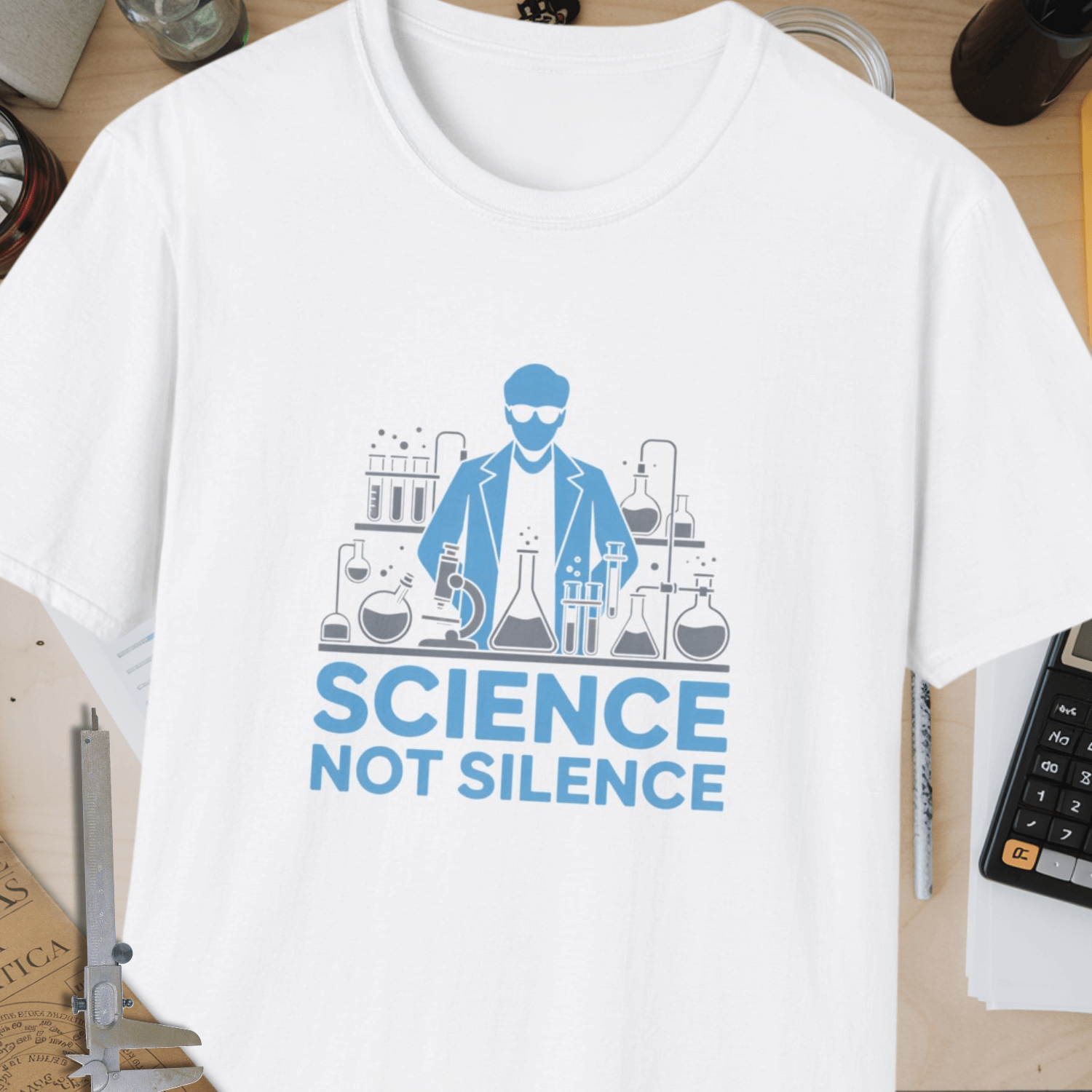
Why Science Needs a Voice as Well as a Method
I used to work in a place where the Salish Sea meets snow-fed rivers, and most conversations can toggle from salmon runs to signal detection in a breath. Out here, I’m skeptical by habit and evidence‑hungry by trade. So, when people ask whether scientists can be activists without biasing their work, I start with a simple test: Is advocacy changing the data, or just ensuring the data isn’t drowned out? Chefs can love food without burning it; likewise, scientists can care about outcomes without cooking results. The relevant risk isn’t caring, it’s compromising methods. And we have codified guardrails for that. (NAS, Objectivity, Independence, and Excellence, 2024; APS, Ethics Standards, n.d.)
The Core Claim
Advocacy done right is not a threat to objectivity; it’s a shield against distortion. Silence in the face of organized misinformation is not neutral; it’s an asymmetric concession that lets falsehoods set the terms of debate. If the public is told vaccines hide microchips and the virologist stays quiet, that’s not objectivity… it’s absence. (Mayo Clinic, Debunking COVID-19 myths, 2025; Taubert et al., BMC Public Health, 2024)
What the Evidence Says About Speaking Up
1) Scientific integrity has rules; and advocacy doesn’t void them.
Objectivity is safeguarded by transparent methods, conflict‑of‑interest disclosures, and independent peer review. Institutions emphasize that nonpartisanship applies to how evidence is gathered and evaluated; not to whether experts can communicate implications or call out misuse. (NAS, Objectivity, Independence, and Excellence, 2024; COPE, Guidelines on Good Publication Practice, n.d.)
2) Public engagement is a professional responsibility, not a hobby.
Major bodies, AAAS and the American Academy of Arts & Sciences among them, argue that scientists should be trained, supported, and incentivized to engage citizens and decision‑makers because policy and public choices hinge on accurate evidence. (AAAS, Advocacy for Evidence, 2020; American Academy, Public Face of Science—Priorities, n.d.)
3) Silence carries measurable costs in a misinformation‑rich environment.
Empirical reviews show conspiracy narratives, including the “microchip vaccine” myth, correlate with lower vaccination intent and uptake; controlled studies find exposure to such narratives causes small but significant drops in intent. (Taubert et al., BMC Public Health, 2024; Islam et al., PLOS ONE, 2021)
Health organizations repeatedly debunk microchip claims and outline transparent ingredient lists; evidence that expert communication changes the information landscape. (Mayo Clinic, Debunking COVID-19 myths, 2025; Britannica, COVID‑19 Vaccine Myths, 2021)
4) Prebunking and targeted communication are testable; and work.
Psychological “inoculation” (prebunking) makes people more resistant to manipulation techniques across cultures; fielded games and videos show robust, replicable effects, though real‑world durability and audience tailoring still need work. (Roozenbeek & van der Linden, HKS Misinformation Review, 2020; Lewandowsky & van der Linden, ERSP, 2021; Roozenbeek et al., Advances in Psychology, 2024)
Comparative studies indicate both prebunking and debunking reduce reliance on falsehoods, with measurable behavioral correlates (willingness‑to‑pay, information seeking). (Tay et al., British Journal of Psychology, 2022)
5) Scientists who advocate don’t automatically lose credibility.
Surveys and qualitative work suggest many researchers reconcile identity and action by treating advocacy as evidence‑based duty: speaking to implications while keeping methods impartial. (Finnerty et al., Communications Earth & Environment, 2024; npj Climate Action, 2024)
Ethics pieces argue for responsible activism—through institutions as well as public squares; when the evidence base is settled and political noise buries it. (Royal Society Open Science, Wyatt et al., 2024; Journal of Academic Ethics, Kallergi & Landeweerd, 2025)
Bottom line: speaking clearly about what the data already show is not bias; it’s translation. The bias enters when methods bend, not when results are explained.
A Northwest Thought Experiment; Through Le Guin
Ursula K. Le Guin’s The Dispossessed follows Shevek, a physicist who risks career and comfort to transmit an invention that changes an interplanetary order. The book’s core dilemma, does a scientist owe anything beyond equations?, maps eerily onto today’s objectivity‑vs‑obligation debate. Le Guin’s “ambiguous utopia” shows how systems can stall when experts retreat into enclaves; Shevek’s choice to “carry the message” is not anti‑science; it’s fidelity to what the science enables. (The Conversation, 2024; Le Guin Estate notes, 2024)
Isn’t that the point? A result that never leaves the lab is indistinguishable from a result that was never found.
Guardrails That Keep Advocacy Safe for Science
- Methods before megaphones. Publish first, advocate second; separate peer‑reviewed claims from personal views. (NAS, Principles & Practices, 2025; COPE, Guidance and Tools, n.d.)
- Disclose and document. Conflicts, funding sources, and data availability are nonnegotiable. (NAS, Objectivity, Independence, and Excellence, 2024)
- Prebunk with specificity. Warn what manipulative tactics will look like; give a “micro‑dose” example; offer a refutation template. (UNHCR Information Integrity Toolkit, 2025; van der Linden, Advances in Experimental Social Psychology, 2024)
- Measure outcomes. Treat outreach like any experiment: pre‑register goals, track reach and effect sizes, iterate. (National Academies, Communicating Science Effectively, 2016)
Countering the “Objectivity Requires Silence” Argument
Assertion: “If scientists advocate, they become political and the public will trust them less… so the objective stance is silence.”
Refutation:
- Objectivity is about methods, not muteness. Codes emphasize unbiased analysis and disclosure, not disengagement from public discourse. (NAS, Objectivity, Independence, and Excellence, 2024; APS, Ethics Standards, n.d.)
- Silence cedes the channel. Reviews show conspiracy narratives reduce vaccination intent; doing nothing leaves that relationship intact. (Taubert et al., 2024; Islam et al., 2021)
- We have tested tools. Prebunking improves resistance to manipulation; both prebunking and debunking reduce reliance on false claims in lab and field. (Roozenbeek & van der Linden, 2020; Tay et al., 2022)
Asserter’s reply: “But public messaging risks backfire and partisanship.”
Response: Backfire is rarer than assumed and can be minimized by tactic‑focused prebunks and audience‑tailored design; the outstanding challenge is scaling effective (not just efficacious) interventions; an argument for better engagement, not less. (Lewandowsky & van der Linden, 2021; Roozenbeek et al., 2024)
Asserter’s follow‑up: “So where’s the line?”
Response: The line is where evidence ends. Communicate what studies show; label value judgments; keep data and advocacy in different drawers but in the same desk. (National Academies, Principles & Practices, 2025)
What You Can Test Next (Predictions You Can Falsify)
- Prebunking > no message: In matched communities, prebunking modules will produce higher manipulative‑technique recognition and lower susceptibility than controls at 2–4 weeks. (Roozenbeek & van der Linden, 2020; van der Linden, 2024)
- Debunking still helps after exposure: Timely refutations with clear causal alternatives will reduce continued‑influence effects compared to simple “myth vs. fact” cards. (Tay et al., 2022)
- Institutional norms matter: Labs with posted CoI policies and communication SOPs will show fewer retractions and higher public trust metrics than labs without them over 24 months. (COPE, Guidelines, n.d.; NAS, Objectivity, Independence, and Excellence, 2024)
If those fail, I’ll change my approach. That’s the point.
A Short Pacific Northwest Scene
A field station in the Skagit. An atmospheric river is inbound, and a hydrologist has the newest flood‑risk ensembles pinned to a cork board. The data are good. Meanwhile, a county Facebook group is circulating a post claiming “dam releases” are a plot to force relocations. The hydrologist can let the model be “objective” in the lab; or call the radio station, post the hydrographs, and explain the return intervals before the water crests. What protects objectivity better: silence that leaves the rumor unchallenged, or speech that anchors action to evidence? (National Academies, Science Communication Collection, 2017–2025)
A Challenge for Readers: Three Ideas to Debate (Publicly)
- Define the boundary: Where, precisely, does methodological objectivity end and civic obligation begin in your field? Use one case from the last year and identify the test you’d use to police the boundary. (NAS; COPE)
- Design a prebunk: Draft a 120‑second video script that follows the “warn‑microdose‑refute” pattern for a myth you encounter locally. Predict its effect size and how you’ll measure decay after one month. (UNHCR Toolkit; HKS Misinformation Review)
- Institutional accountability: Propose one policy your department could adopt this quarter that improves transparency and empowers engagement. Specify the metric you’ll track. (AAAS; National Academies)
If we want science to survive the noise, the lab coat and the megaphone, handled carefully, aren’t contradictions. They’re complementary tools.
References
- American Academy of Arts & Sciences, The Public Face of Science in America: Priorities for the Future (n.d.).
- American Physical Society, APS Ethics Standards (n.d.).
- Islam, M. S., et al., “COVID‑19 vaccine rumors and conspiracy theories: The need for cognitive inoculation…,” PLOS ONE (2021).
- Kallergi, A., & Landeweerd, L., “Science, Activism, and Climate Action,” Journal of Academic Ethics (2025).
- Lewandowsky, S., & van der Linden, S., “Countering Misinformation… Inoculation and Prebunking,” European Review of Social Psychology (2021).
- Mayo Clinic, “Debunking COVID‑19 myths” (2025).
- NAS, Objectivity, Independence, and Excellence (2024).
- National Academies, Communicating Science Effectively: A Research Agenda (2016).
- National Academies, Principles and Practices That Guide Our Work (2025).
- Roozenbeek, J., & van der Linden, S., “Prebunking… can reduce susceptibility across cultures,” HKS Misinformation Review (2020).
- Roozenbeek, J., Remshard, M., & Kyrychenko, Y., “Beyond the headlines: On the efficacy and effectiveness…,” Advances in Psychology (2024).
- Royal Society Open Science (Wyatt, Gardner, Thierry), “Actions speak louder than words: Responsible scientific activism” (2024).
- Taubert, F., et al., “Conspiracy narratives and vaccine hesitancy: scoping review,” BMC Public Health (2024).
- Tay, L. Q., et al., “A comparison of prebunking and debunking interventions,” British Journal of Psychology (2022).
- UNHCR, Information Integrity Toolkit: Prebunking (2025).
- Ursula K. Le Guin Estate, “The Dispossessed” (work page & 50th anniversary notes, 2024).
- The Conversation, “The Dispossessed at 50… political power endures” (2024).
- COPE, Guidance and Tools (n.d.); Guidelines on Good Publication Practice (n.d.).
- AAAS, Advocacy for Evidence (2020).

Leave a Reply