
When the Heritage Foundation was founded in the 1970s, it presented itself as a corrective to what conservatives saw as a technocratic, managerial liberalism. It promised intellectual rigor, principled governance, and a return to what it framed as constitutional conservatism. But over the decades, critics argue that the institution drifted away from conservative philosophy and toward something far more reactive, more opportunistic, and ultimately more corrosive to the movement it claimed to defend.
The shift began when Heritage realized that policy papers were less influential than political theater. Instead of grounding arguments in conservative intellectual traditions, Burkean restraint, civic virtue, institutional stability, the organization increasingly embraced messaging designed to mobilize outrage. Scholars who study the movement note that this pivot replaced conservative thought with conservative branding. The result was a politics that rewarded emotional intensity over intellectual coherence.
As the decades passed, critics say Heritage became less a think tank and more a factory for ideological justifications. Deregulation was no longer about free markets; it became a moral crusade. Tax cuts were no longer about economic theory; they became a litmus test of loyalty. Religion was no longer a personal or communal practice; it became a political instrument. In this environment, the line between faith and faction blurred, and the moral vocabulary of conservatism, responsibility, humility, stewardship, was repurposed to defend policies that benefited the powerful at the expense of the vulnerable.
Historians point out that this transformation helped create the conditions for the current tide of social division. When a movement’s intellectual infrastructure prioritizes winning over reasoning, it becomes easy for resentment to masquerade as principle. When a think tank rewards maximalism, it becomes easy for cruelty to present itself as strength. When religious language is used as a political tool, it becomes easy for bigotry to hide behind theology. Critics argue that Heritage played a central role in normalizing this shift, providing the white papers, talking points, and moral cover that allowed these tendencies to flourish.
The result, according to many observers, is a version of American conservatism that has drifted far from its philosophical roots. Instead of prudence, there is provocation. Instead of civic responsibility, there is grievance. Instead of moral seriousness, there is moral theater. And instead of a movement grounded in ideas, there is a movement driven by identity, fear, and the pursuit of power for its own sake.
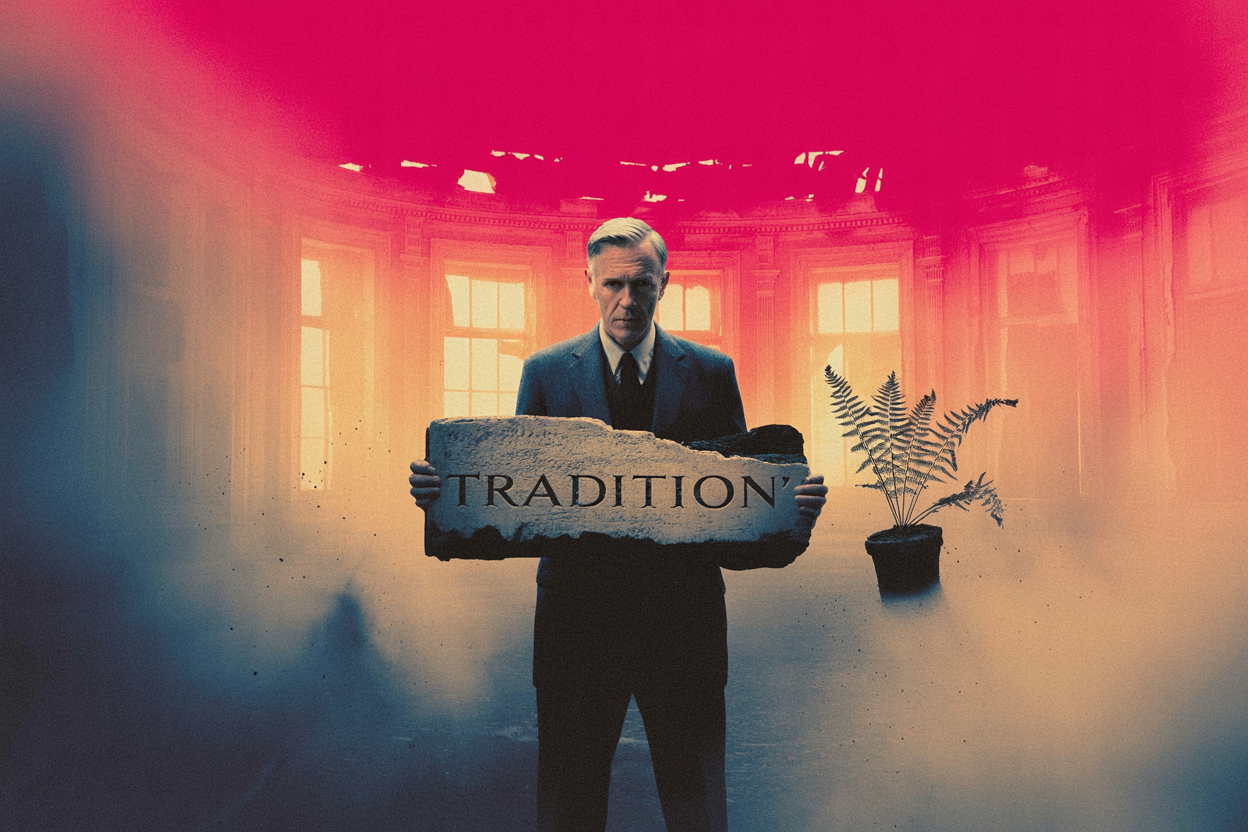
This is the irony that scholars often highlight: the Heritage Foundation set out to strengthen conservatism, but critics argue it helped hollow it out. By prioritizing ideological purity over intellectual honesty, and political victory over civic virtue, it contributed to a landscape where hate can be framed as patriotism, greed as freedom, and bigotry as tradition. The institution didn’t create these forces, but it gave them vocabulary, legitimacy, and a seat at the table.
Whether one agrees with this critique or not, the pattern is clear in the historical record: when a movement’s think tanks stop thinking, the movement itself loses its anchor. And the consequences ripple outward into every part of American life.

Leave a Reply